How to choose a tube filling machine for pharmaceutical creams
Introduction
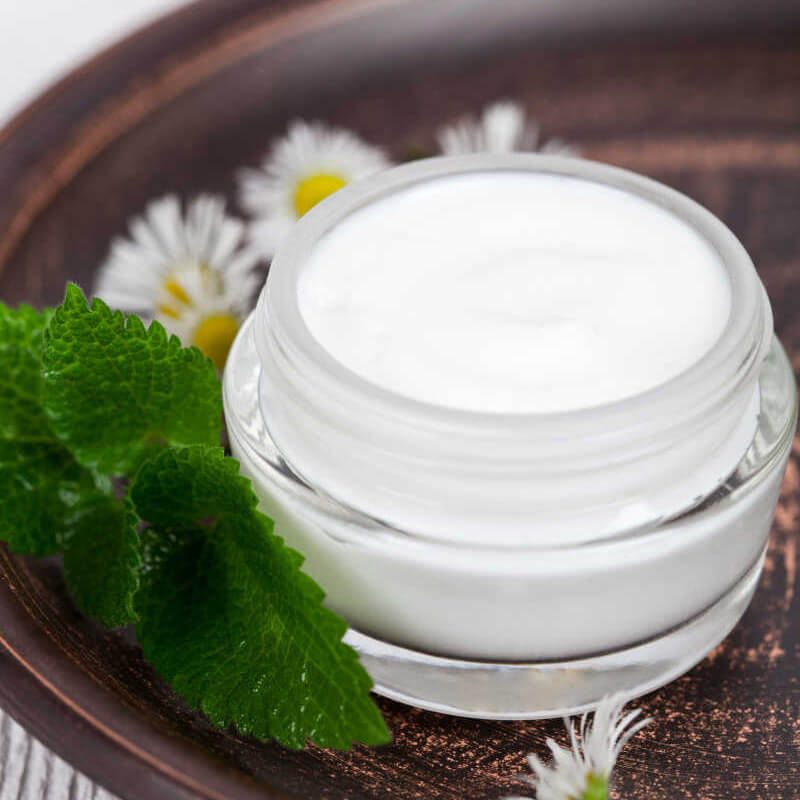
As winter sets in and the temperatures drop, a daily layer of face cream becomes your best defense against the cold. But have you ever paused to wonder how each tube of cream ends up so perfectly filled? From precise dosing to the crisp printing of the company name and production date, the process behind getting that cream into the tube is a fascinating blend of efficiency and precision. Modern tube filling machines make this possible, combining advanced automation, high-speed sealing, and intelligent control systems to ensure every tube meets strict quality standards. These machines not only handle delicate creams with care but also maintain consistency, hygiene, and speed—turning what seems like a simple product into a marvel of engineering.
1.What Is a Tube Filling Machine?
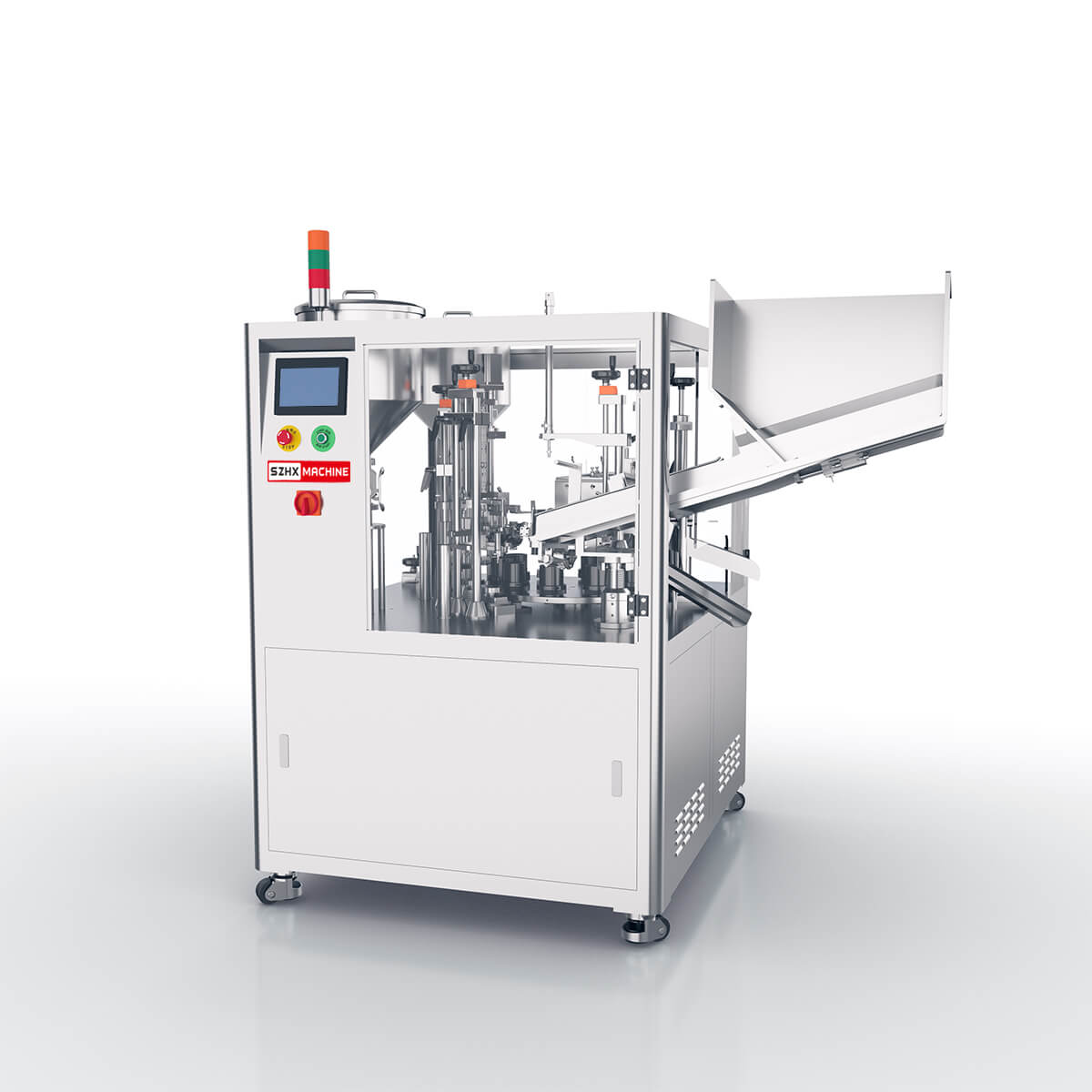
A tube filling machine is equipment designed to fill tubes with products such as liquids, gels, pastes, or creams. These machines are widely used for items like hand lotion, shampoo, paint, and even food products like icing.
Before tube filling equipment existed, operators had to load each tube by hand—spooning or squeezing product into the opening one by one, which was slow and messy. Modern tube filling machines completely changed the process, making tube filling fast, clean, and highly efficient.
1.1 How It Works
While different models vary, most tube filling machines follow these steps:
Tube loading – Either manually or automatically, tubes are placed into holders.
Tube orientation – The machine locates the tube’s eye mark to ensure correct positioning.
Filling – A dosing system injects a precise amount of cream into each tube.
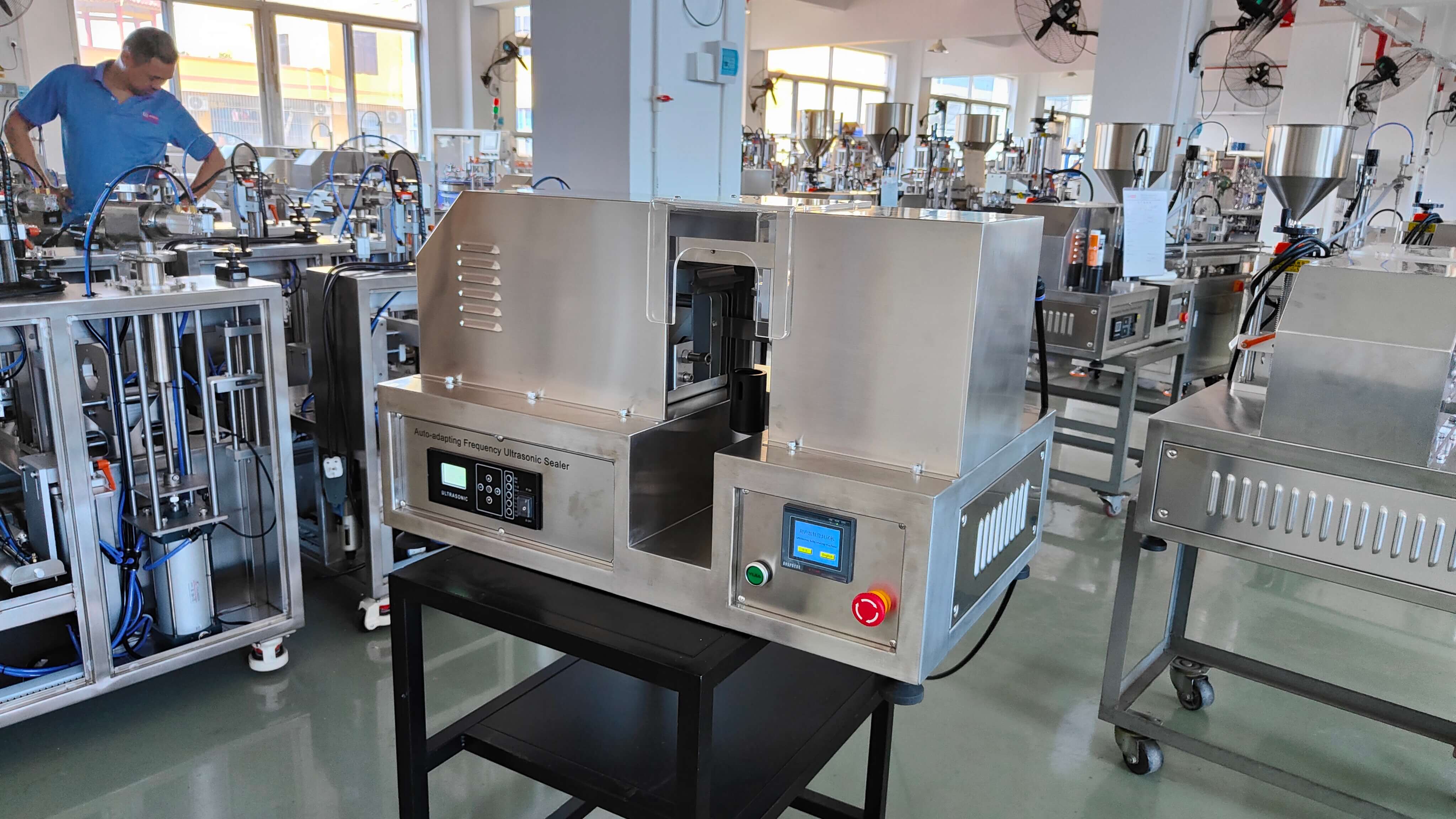
Sealing – Depending on machine type, tubes are sealed by heat, ultrasonic, or hot air.
Trimming and coding – Excess edges are trimmed and batch codes are printed.
Discharge – Finished tubes exit to a conveyor or collection tray.

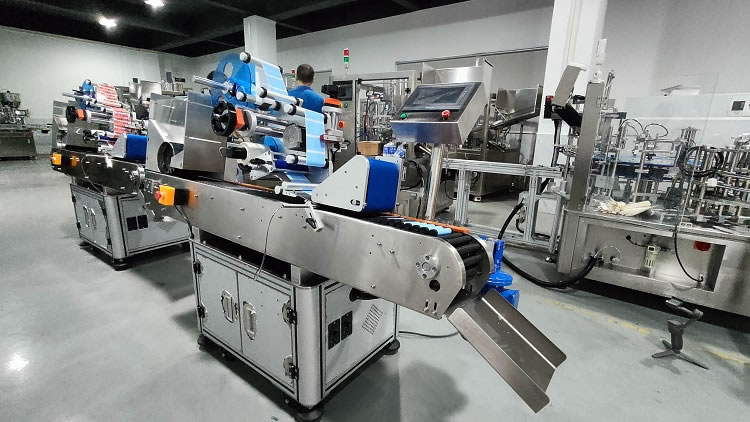
Tube filling machines take over the entire filling process, making it fast, consistent, and ideal for handling thousands of tubes. Here’s how the workflow typically looks:
Empty tubes are fed into the machine—either automatically or by hand.
The machine orients the tubes so the open ends face upward for accurate filling.
Depending on how thick or fluid the product is, the system uses the appropriate filling method to dispense the exact required amount.
After filling, the tube is securely sealed to prevent leaks or spills. Sealing can be done through heat, ultrasonic technology, or mechanical pressure.
Additional steps—like capping, labeling, or secondary packaging—can be added to the process as needed.
Finally, the filled and sealed tubes exit the machine, typically onto a conveyor or robotic arm, and move on to boxing.
These machines handle tube after tube through multiple automated stages, ensuring precise filling volumes and strong, consistent seals—eliminating the mess and inconsistency of manual filling.
2.Types of Tube Filling Machines for Pharmaceutical Creams
Tube filling machines come in several configurations depending on automation level and production design.
2.1 Semi-Automatic Tube Filling Machines
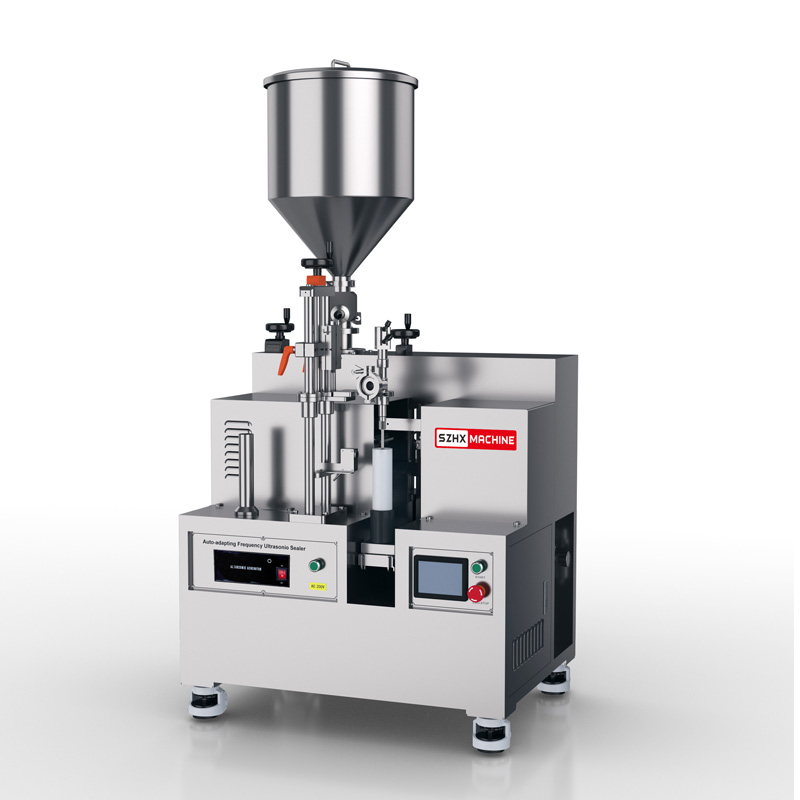
Key Features:
- Space-saving, benchtop design
- Cost-effective investment
- Tubes loaded and unloaded manually
- Filling and sealing processes automated
- User-friendly touchscreen control panel
Ideal for start-up production—such as small-scale batches, laboratory tests, patches and new product launches—where the required output is relatively low.
2.2 Fully Automatic Tube Filling Machines
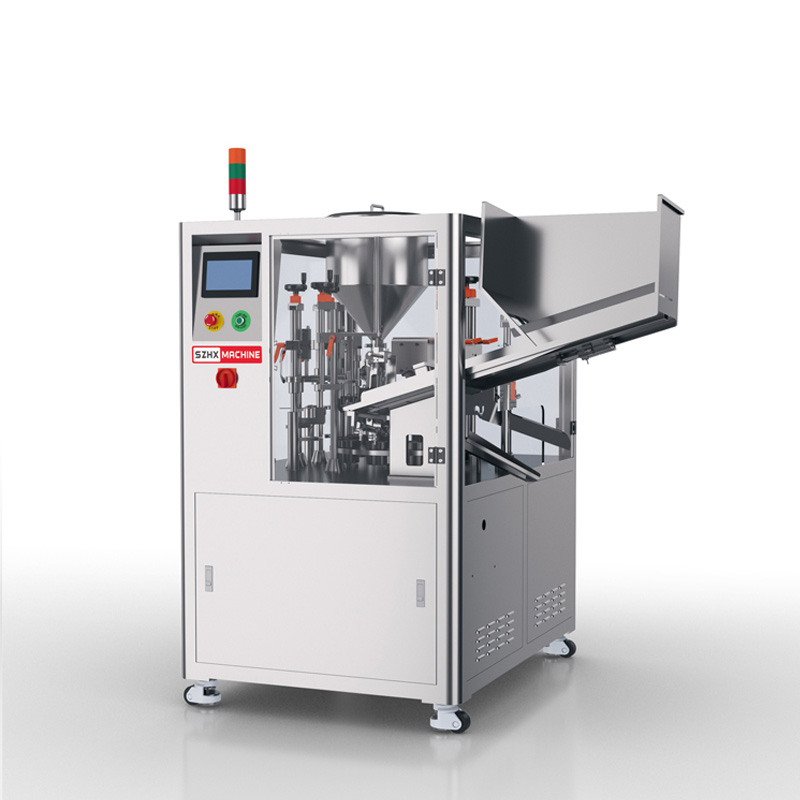
Key Features:
- Automated tube loading and positioning
- Programmable control via PLC /Touchscreen
- Precision filling by servo motors
- Built-in sealing options, including ultrasonic and heat sealing
- High production rates—capable of processing thousands of tubes per hour
- Advanced quality checks such as weight verification and leak detection
- Requires very little manual operation
Suitable for large-scale production settings, including pharmaceutical, cosmetic, and food manufacturing, where high output and adherence to GMP and quality standards are essential.
2.3 Rotary Tube Filling Machines
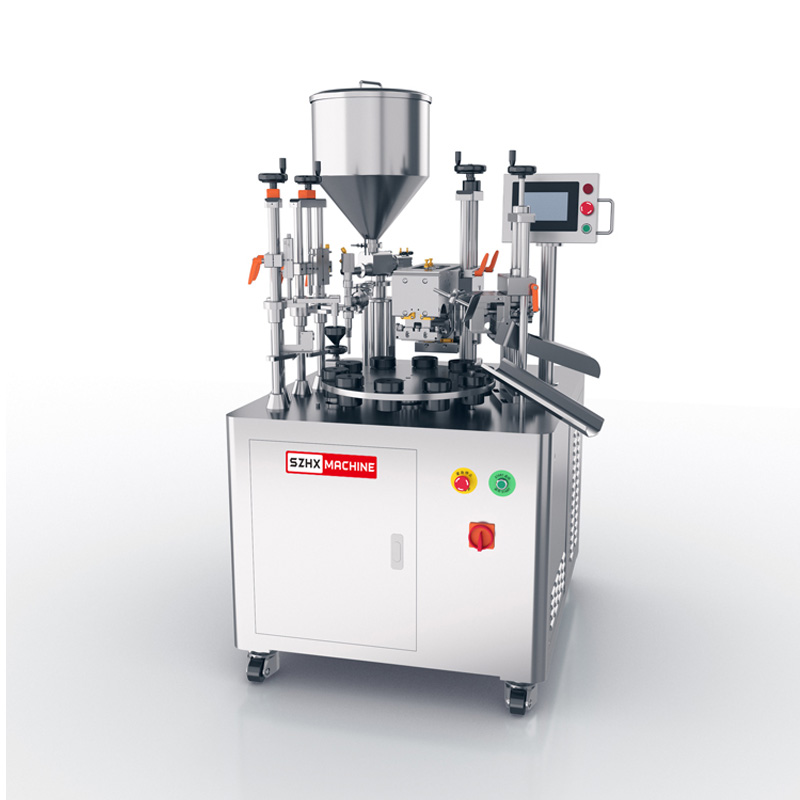
Key Features:
- Automatic rotary table for handling tubes
- Mechanical gripper for loading and unloading
- Very high output—up to thousands tubes per hour
- Works best with round tubes
- Smaller and more compact than linear machines
- Accurate filling with servo motors and air systems
- Easy to switch between different tube sizes
Designed for high-volume production in pharmaceutical and cosmetic manufacturing facilities, where maximizing output is critical.
3. Comparison of Semi-Automatic & Fully Automatic Tube Filling Machines
When you’re just starting to fill tubes, one of the biggest decisions is whether to go with a fully automatic machine or a semi-automatic one. Figuring out which level of automation fits your workflow can feel a bit confusing at first!
So, we’ve put together a helpful walkthrough that compares both types across several key points. By the time you finish, you’ll have a clear picture of which option suits your production needs best. Let’s get started!
Output Needs
Fully automatic tube fillers are built for speed. They can pump out thousands of tubes per hour, making them ideal for large-scale factories that need to fill huge volumes every day.
Semi-automatic machines work at a more modest pace — usually a few hundred tubes per hour — and require some operator involvement. They’re a great fit for smaller businesses, short production runs, or testing new products.
Labor Costs
Since fully automatic machines run with minimal human input, companies can significantly cut down on labor expenses. You typically only need a couple of operators to handle refilling materials and basic maintenance.
Product Variety
Fully automatic fillers can easily manage different product types — thick, thin, creamy, or textured. Switching from one formula to another is quick and simple.Semi-automatic machines are better suited for companies with fewer product variations. Regular changeovers can be time-consuming and aren’t as convenient.
Investment Budget
Fully automatic fillers come with advanced sensors, controls, and servo systems, so the upfront cost is higher. Installation and integration also add to the investment.
Semi-automatic machines use simpler components, making them more budget-friendly and easier to get up and running for companies with tighter budgets.
Changeover Time
With full automation, changing tube sizes is incredibly fast — you can swap sizes in just minutes without interrupting production.
On semi-automatic equipment, changeovers take longer because parts need to be physically swapped. During this time, the line has to stop completely, which can slow down operations.
4.The Operation Process of Test Tube Filling Machines
Testing a tube filling machine is critical before full-scale production. The process typically involves:
Setting up the machine with a sample product and tube type.
Running the machine at low speed to check for proper filling, sealing, and coding.
Measuring the output to ensure dosing accuracy.
Checking the quality of seals, trimming, and batch codes.
Adjusting machine parameters such as filling volume, sealing temperature, and conveyor speed for optimal performance.
Regular testing ensures consistent quality, avoids wastage, and verifies compliance with production standards.At present, automated test tube fillers can process up to 1,680 tubes per hour, with computerized controls ensuring accurate flow into each and every tube
5.Advantages of Ordering Tube Filling Machines
Investing in tube filling machines offers several benefits:
High Accuracy: Precise filling reduces product waste.
Efficiency: Speeds up production compared to manual filling.
Hygienic Design: Minimizes contamination risk, essential for pharmaceutical products.
Consistent Quality: Produces uniform products in every batch.
Labor Savings: Reduces manpower, especially with fully automatic machines.
Scalability: Machines can accommodate increased production as business grows.
6. Latest Innovations in Tube Filling Technology
6.1 High-Speed Sealing System
High-speed sealing technologies allow manufacturers to maintain fast production rates without compromising quality. Both ultrasonic and hot-air sealing systems shorten production time while ensuring each tube is securely sealed.
6.2 Robotics and Automated Operation
Modern tube filling lines integrate robotics for feeding, positioning, filling, sealing, labeling, and coding. This reduces human error, increases production efficiency, and enables 24/7 operation.
6.3 Precision Filling Technology
Advanced filling systems ensure every tube receives the exact amount of cream. With servo motors and intelligent flow monitoring, accuracy can reach ±1%, crucial for pharmaceuticals, cosmetics, and high-value products.
6.4 Industry 4.0 Version
Smart tube filling machines connect to Industry 4.0 systems for real-time monitoring, predictive maintenance, automated data collection, and integration with MES/ERP platforms, making production more transparent and efficient.
6.5 Custommanufacturing Solutions
Every product has unique requirements. Customized solutions accommodate special tube shapes, high-viscosity creams, or multi-product lines, improving flexibility and reducing downtime.
6.6 Flexible, Modular Design
Modular designs allow manufacturers to add features such as labeling, nitrogen flushing, and inspection systems over time. This ensures scalable upgrades as production needs grow.
7. How Tube Filling Manufacturers Support Customer Requirements
7.1 Offer Innovative, Made-to-Order Solutions
Top suppliers provide tailored configurations rather than one-size-fits-all machines, catering to each client’s product and production requirements
7.2 Build Easy-to-Use Equipment
Intuitive interfaces, touch screens, and simple maintenance routines help staff operate machines efficiently with minimal training.
7.3 Offer 24/7 Technical Support
Reliable technical support includes remote diagnostics, guidance for adjustments, spare parts supply, and on-site assistance. Customers feel reassured, which helps build loyalty.
7.4 Keep Up with Industry Developments
Manufaturers follow innovations like sustainable packaging, AI monitoring, and advanced sealing technologies, helping clients stay competitive.
7.5 Achieve First-Time Quality
Strong engineering, systematic testing, parts for renowned brands and quality control ensure our machines perform reliably from day one, reducing downtime and production loss.
8. Tube Filling Solutions Across Different Industries
8.1 Pharmaceutical and Healthcare
Applications: ointments, gels, creams,paste
Focus: precision dosing, GMP compliance, contamination-free filling
8.2 Skincare and Makeup
Applications: face creams, sunscreens, cleansersFocus: aesthetic sealing, consistent output, and product safety
8.3 Food and Beverage
Applications: honey, sauces, jams
Focus: food-grade materials, hygiene, and high-speed production
8.4 Chemical and Industrial
Applications: adhesives, lubricants, industrial pastes
Focus: corrosion-resistant structures, high-viscosity handling, and durability
9. Expected Functions of Tube Filling Equipment
High-quality tube fillers offer:
Stable production speed
High dosing accuracy
Reliable sealing
Automation and minimal human intervention
Quick format changeoversCompatibility with various tube types and materials
FAQs
10. In conclusion
Choosing the right tube filling machine impacts productivity, quality, and brand reputation. Investing in reliable equipment from reputatable company – SZHX Packaging Machine ensures long-term operational stability,competitive advantage and efficiency.