How to choose the right perfume filling machine for my production line?

When setting up a perfume production line, one of the most crucial decisions is selecting the right perfume filling machine. A machine that suits your production needs not only ensures efficiency but also maintains the quality of your products. This guide will help you make an informed decision by exploring the role of perfume filling machines, the types available, the benefits of automation, and more.
链接代码:<iframe width=”560″ height=”315″ src=”https://www.youtube.com/embed/RXDOHH2oSeY?si=Y5ziaZmglMAlF0et” title=”YouTube video player” frameborder=”0″ allow=”accelerometer; autoplay; clipboard-write; encrypted-media; gyroscope; picture-in-picture; web-share” referrerpolicy=”strict-origin-when-cross-origin” allowfullscreen></iframe>
1. Understanding the Role of a Perfume Filling Machine
A perfume filling machine is responsible for accurately filling bottles with fragrance while minimizing wastage and maintaining product quality. These machines are designed to handle the specific challenges posed by perfume, including the volatile nature of the liquid and the need for precise measurements. Whether manual, semi-automatic, or fully automatic, the filling machine is a core component of a production line, ensuring consistency and efficiency.
2. Key Benefits of Using a Perfume Filling Machine
Precision and Accuracy: Modern filling machines ensure that each bottle is filled with the exact amount of perfume, reducing errors and wastage.
Increased Productivity: Automation speeds up the filling process, reducing the need for manual labor and allowing for higher output.
Consistency: The use of machines ensures that each bottle is filled the same way, maintaining the quality and uniformity of the product.
Cost Efficiency: While the initial investment in a filling machine may be significant, over time, it saves costs by improving production rates and minimizing wastage.
3. Types of Perfume Filling Machines
Perfume filling machines generally fall into three categories:
Manual Filling Machines: These are ideal for small-scale or artisanal producers, where an operator manually fills each bottle. They are low-cost and easy to operate but are slower and prone to human error.

Semi-Automatic Filling Machines: These machines automate part of the process, such as filling the bottles, but still require human intervention for other tasks. They are a good choice for medium-scale operations.

Fully Automatic Filling Machines: These are designed for high-volume production and handle the entire filling process, including capping, labeling, and even packaging. They are the most efficient and cost-effective for large-scale operations.

4. Applications of Different Perfume Filling Machines
Manual Machines: Best for limited production and niche brands that require more attention to detail.
Semi-Automatic Machines: Suitable for medium-sized manufacturers that need a balance between efficiency and cost.
Fully Automatic Machines: Ideal for large perfume manufacturers who need high-speed, continuous filling and capping processes.
5. Factors to Consider Before Choosing a Perfume Filling Machine
Before selecting a perfume filling machine, consider the following:
Production Volume: High-volume operations require fully automatic machines, while smaller brands can benefit from semi-automatic or manual machines.
Bottle Type: Ensure the machine is compatible with the type of bottles you use. Some machines handle only specific bottle sizes or shapes.
Filling Accuracy: The type of filling system—such as vacuum, gravity, or piston—determines the accuracy of each fill.
Material Compatibility: Consider if the machine can handle various types of perfumes, including those with higher alcohol content or thicker formulations.
Maintenance and Support: Choose machines that are easy to maintain and come with reliable customer support.
6. Automatic Perfume Filling Machine Buying Guide
When purchasing an automatic perfume filling machine, follow this guide:
Capacity and Speed: Make sure the machine can handle your required volume. Look for machines that offer a range of speeds (e.g., 15-20 bottles per minute).
Flexibility: A machine that can be adjusted for different bottle sizes and types offers long-term value as your product line expands.
Ease of Operation: Machines with user-friendly interfaces and automated processes reduce the risk of errors.
Machine Durability: Look for machines made from high-quality materials like stainless steel for longevity.
7. Perfume Filling Machine Price Comparison
The price of a perfume filling machine can vary significantly based on the type and features. Manual machines are typically the least expensive, while fully automatic machines come with a higher price tag due to their complexity and speed. However, the investment in an automatic machine often results in faster production times and fewer labor costs. Always compare prices across different brands and models, and ensure that you’re getting the best value for your needs.
8. Perfume Filling and Capping Machine Selection Tips
When choosing a perfume filling and capping machine, consider these factors:
Capping Type: Ensure the machine supports your capping requirements, whether screw-on, crimping, or pressing caps.
Automation Level: Some machines offer both automatic and manual features. Choose one based on your production capacity.
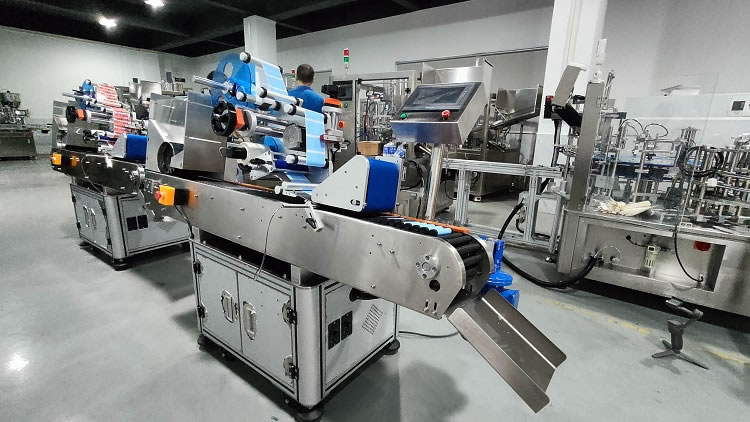
Integration with Other Equipment: The filling machine should integrate seamlessly with other parts of your production line, such as labeling or packaging machines.
9. Real- Applications in Factories
Perfume filling machines are used in various industries, from luxury perfumes to mass-market scents. In a typical factory setup, perfume filling machines are often used in combination with automated capping, labeling, and packaging lines to ensure efficient mass production. The machines’ flexibility to handle different bottle sizes and formulations makes them suitable for a wide range of perfume products.
10. Global Leaders in Perfume Filling Machine Manufacturing
Several companies around the world specialize in perfume filling machines, offering both customized and standardized models. Notable names in the industry include:
Bosch Packaging Technology: Known for high-quality fully automated filling and capping systems.
IMA Group: A leading manufacturer of filling machines with a strong reputation for precision and reliability.
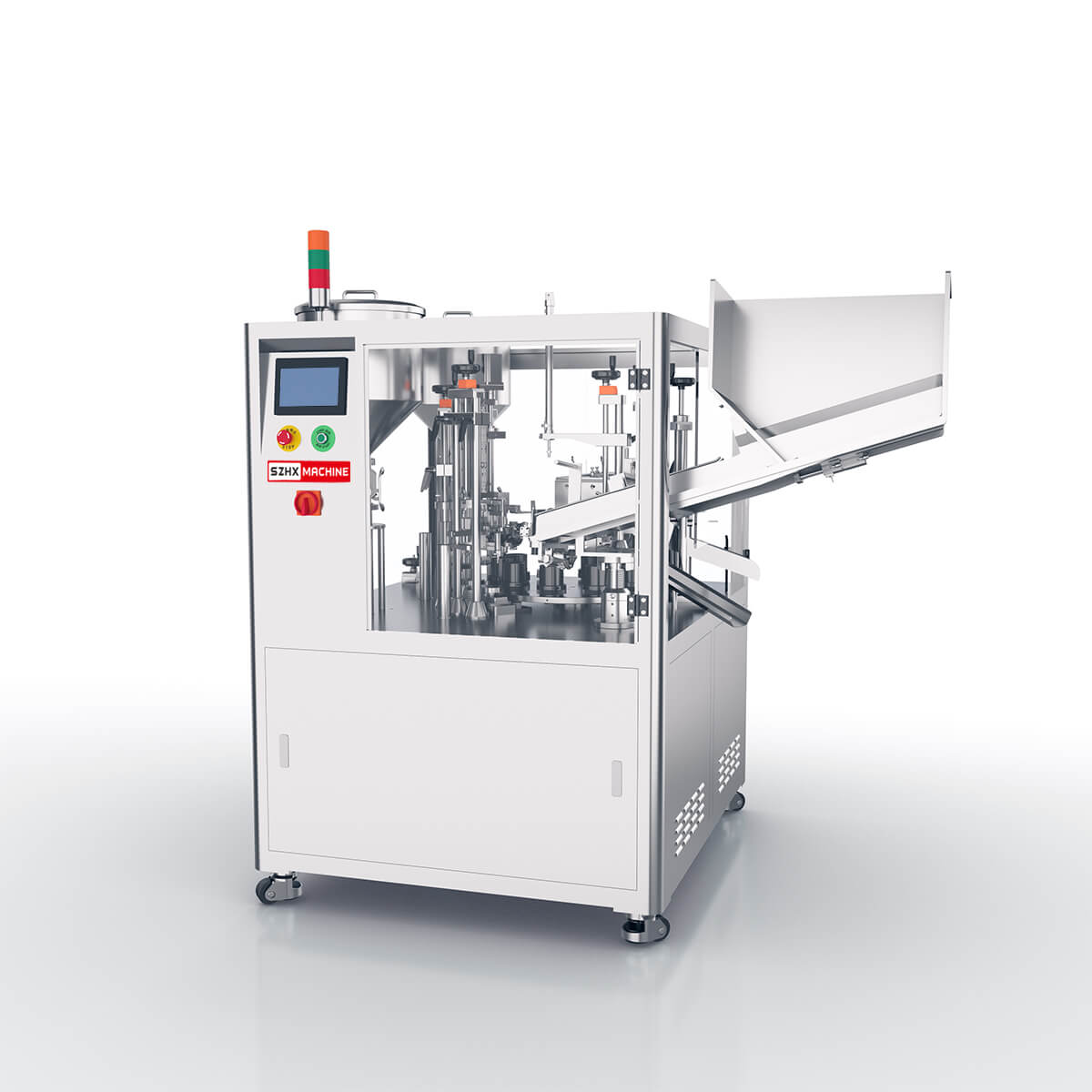
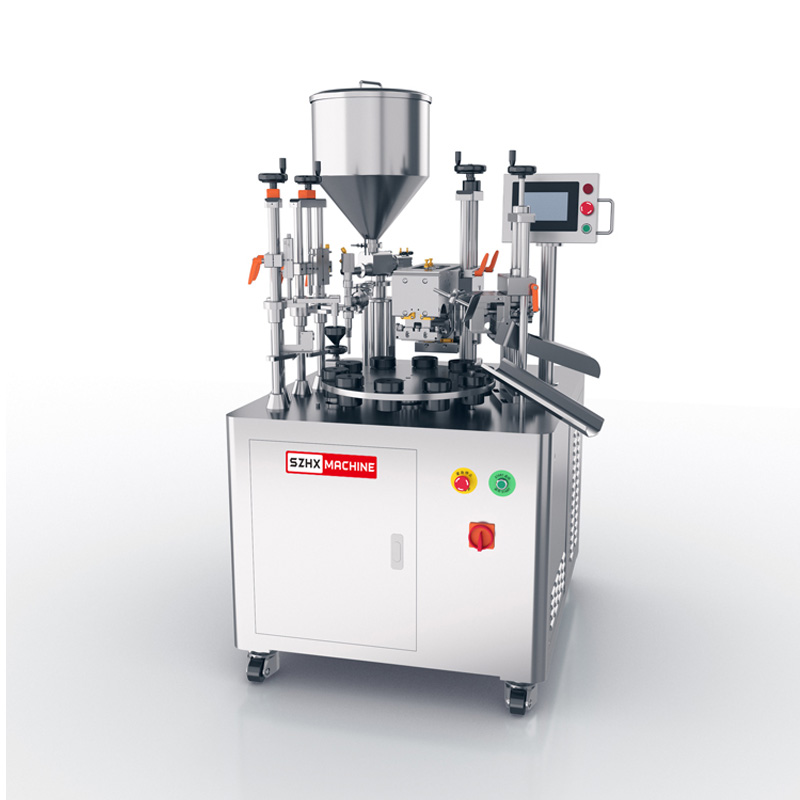
SZHX Packaging Machine: professional manufacturer of liquid filling and packaging equipment, specializing in perfume filling machines for cosmetic and fragrance manufacturers worldwide. With years of engineering experience, we deliver stable, precise, and user-friendly solutions for modern production lines.
Filling Machines India: Specializes in semi-automatic and automatic perfume filling systems for various bottle sizes and types.
11. Discover How SZHX Packaging Machine Helps You Succeed
SZHX Packaging Machine offers both semi-automatic and fully automatic perfume filling machines designed to meet diverse production needs. Our fully automatic machine features a range of customizable options, including:
Filling Range: 5-500ml (vacuum filling system)
Capacity: 15-20 bottles per minute
Application: Suitable for flexible perfume bottle/sample filling and capping
Our machines are built with durable 304 stainless steel and offer advanced technology to improve accuracy, efficiency, and overall production performance. With a fully automated process that includes perfume filling, capping, and pressing, SZHX helps streamline your production line and boosts your output while ensuring consistent product quality.
Comparison: Semi-Automatic vs Fully Automatic Perfume Filling Machines
| Aspect | Semi-Automatic Machine | Fully Automatic Machine |
| Initial Investment | Lower cost, suitable for startups | Higher cost, suitable for large-scale production |
| Production Speed | Low to medium output | High-speed continuous production |
| Labor Requirement | More manual operation required | Minimal manual labor |
| Automation Level | Partial automation | Full automation |
| Flexibility | High flexibility for small batches | Optimized for stable large batches |
| Floor Space | Compact footprint | Larger footprint |
| Filling Accuracy | Good, operator dependent | Very high, PLC controlled |
| Best For | Small to medium manufacturers | Medium to large manufacturers |